In the past few weeks, I have noticed a number of “customer service misses” on LinkedIn. I have captured two here for @American Express and @Qantas to name two, but there are a host more including premium hotel brands, banks, and more.
Why “call us” is the wrong answer to a public complaint
The first example is for @American Express who charge a tidy sum of $895 a year to Platinum card holders, while they face capacity challenges at some Centurion Lounge locations, resulting in long wait times and overcrowding. The attached LinkedIn post is a clear missed opportunity to address a customer complaining about wait times — “Josh”.
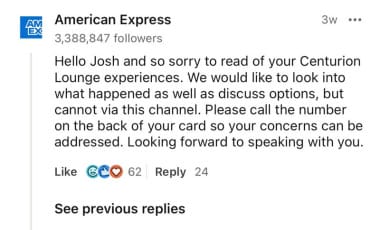
Instead of reaching out to Josh, the response from Amex is to direct him to call them! This seems wrong given the amount Amex is charging in annual fees. We all know about the experience… Josh will have to repeat his story (the one he’s already shared on LinkedIn) and take the initiative. Amex knows who he is from his post, and could deposit compensation points and send a personal email apologizing for his experience; or call him to discuss his concerns, sharing how they are addressing known issues with overcrowding and wait lines, and offer compensation. Seems basic, eh.
Canned responses don’t cut it
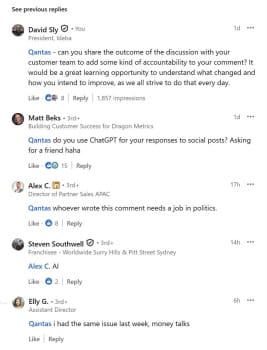
Qantas is another example of a missed opportunity when dealing with a customer complaint on LinkedIn. Their “standard” response sharing they’d “look into the issue with their Customer Team” did not address customer feedback. And when I asked Qantas to share the outcome of how their Customer Team addressed the concern (in the spirit of continuous improvement), I was met with a wall of silence. We all know where the original complaint and my follow-up went. Qantas… you can do better!
Using AI to improve the customer experience
Full disclosure… I do not know if either company uses AI to respond to customer complaints online, but the lack of personalization and genuine care is a miss. Both responses seem canned and leave the onus on the customer to follow up.
This is a great example of where AI can be used to enhance the customer service experience flagging issues, initiating proactive follow-ups, and triggering remediation programs based on identified concerns; and still deliver a great experience to premium customers. And while these (and other) premium brands figure this out, there’s always the old-fashioned option to pick up the phone!
If you have any examples of companies that are getting it right and doing a good job, please let me know. It would be great to give them a shout-out on LinkedIn, and celebrate their successes.
Thanks!
David Sly – President