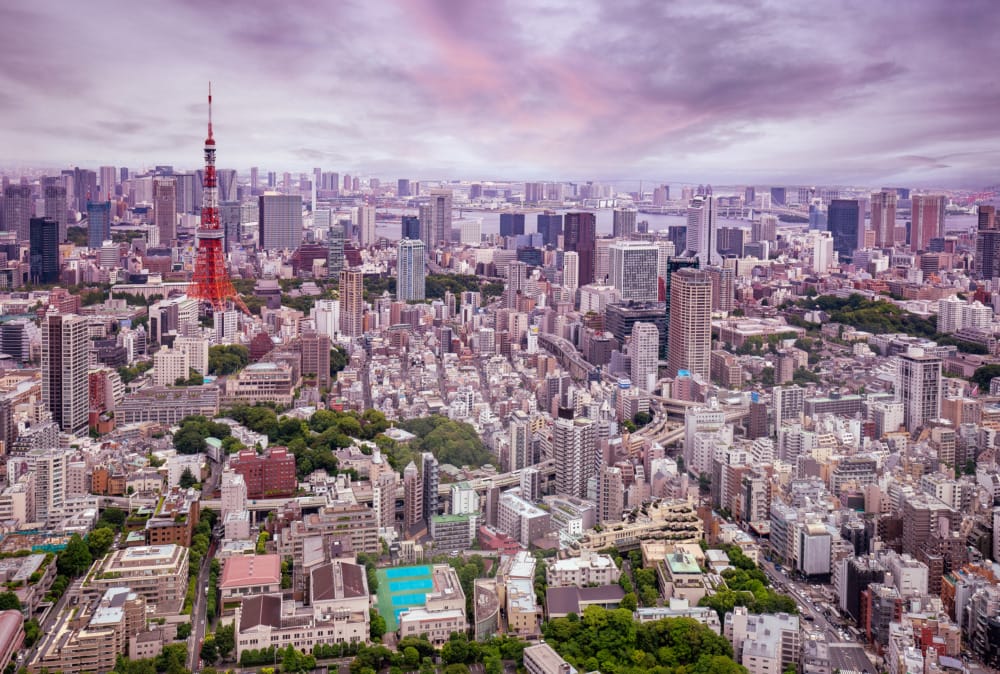
I visited Tokyo recently, and I’m still thinking about it. Not just the food or the sights, but something deeper – the attention to detail woven into everything. Public bathrooms designed with care. Small izakayas with just a few items on the menu, each one prepared thoughtfully. Even the metro displays felt intentional. Nothing seemed accidental.
This trip coincided with finally reading “Ikigai: The Japanese Secret to a Long and Happy Life,” a book that’s been on my list forever. The premise is simple: your ikigai, or reason for being, sits at the intersection of four things—what you love, what you’re good at, what the world needs, and what you can be paid for. At its conclusion, the book provides 10 rules of Ikigai, and I won’t list them all here (because you should really read the book), but two that stood out to me are very contrary to our current zeitgeist: “take it slow” and “live in the moment”.
As we close out 2025 and look toward 2026, I keep coming back to Tokyo and ikigai. Not in some grand, life-changing way, but in how these ideas might shape a more intentional year ahead.
The AI Paradox
One line from the book stuck with me: “The people of Japan have a unique talent for creating new technologies while preserving artisanal traditions and techniques.” We’re living in this intense AI moment where everyone’s trying to figure out how to use it, how to use it meaningfully, while simultaneously being tired about hearing about it. But AI isn’t going anywhere. It’s becoming part of everything, personal and professional.
Here’s what I appreciate more now: AI can help us be more meaningful. Recently, I created an AI agent (it’s easier than you might think) to help a client with a product launch. We used it to pick a name for an upcoming webinar that will showcase new product features. In theory, this is an easy task, but it can take a lot of time because it involves lots of back-and-forth. The agent was able to give us some solid options as a start, saving us a lot of time – though I’m not sure exactly how much. But I do know I finished my workday and walked my dogs before sunset, which in December is a treat.
And here’s the thing. Because I had more time, I didn’t rush the dogs on their walk. They got more sniffs in. I’m usually focused, looking ahead, thinking about my next meeting, but this time I looked up at the sky and noticed the angles of sunlight against the clouds, thinking: Wow, I should get outside more. I transitioned into my evening without the frantic energy of still having work left undone. I thought, this is very ikigai of me. I’m used to moving fast, always productive, even on weekends. But being productive doesn’t necessarily mean being present. I can have a clean house and a (semi) organized garage by Sunday night, but I’m more exhausted than I was Friday afternoon.
Slowing Down to Pay Attention
One of my favorite parts of Tokyo was customizing a pair of jeans in a small fifth-floor shop, in an unassuming building on a quiet street. I chose the style of jeans, picked the rivets and applied them myself, selected a patch – and was done in about an hour with an expert guiding the process, some laughter, and a lot more broken Japanese and English. Sure, the quality of the jeans was excellent, but it was the experience that stuck with me – the care, the attention, and the joy in the process.
The book mentions that turntable needles are almost exclusively made in Japan because that’s where the expert craftspeople live, the few who still know how to use the machinery precisely. (This matters in my household, given our vinyl collection.) There’s something about preserving that kind of attention to detail, even as technology advances.
As I reflect on 2025, I can see where I succeeded in being intentional, and where I rushed. After years of wearing multiple hats in marketing, startups, and consulting, I’ve figured a few things out. But not everything (by a longshot). I’m in favor of slowing down in 2026. Taking more breaths during breaks. Not just walking the dogs but looking up at the sky.
We’re on the cusp of a new year – a blank canvas where anything is possible. So why not be positive? Why not have fewer resolutions and focus on a couple, or just one? No stress, just a dedication (or rededication) to slowing down and being more purposeful, like we probably were before screens became ubiquitous and demanded a huge amount of our attention, with alert pings as a constant soundtrack.
2026 could be a year of ikigai. Maybe yours, too.
Gabi Barragan – Consulting Manager